 Nederlands
 English
Key Populations Remain Integral to HIV Response
Focusing on key populations remains integral to fighting HIV. That is the message of amFAR’s recent report, which highlights the need for targeted prevention efforts to make sure everyone benefits equally from advancements in HIV treatment and prevention.
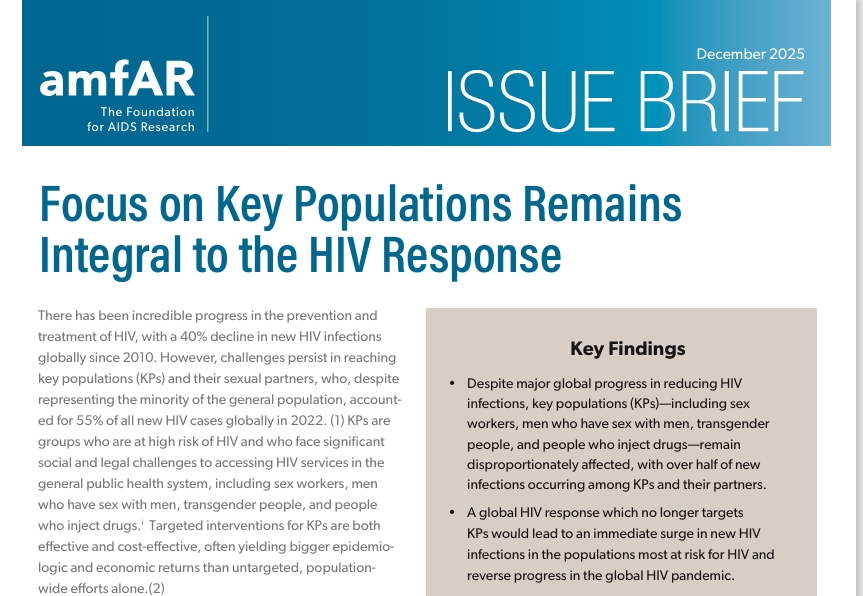
Over the last few years, there has been incredible progress in HIV prevention and treatment but despite this, key populations remain disproportionally affected by HIV. These key populations are groups that are at high risk of contracting HIV, which include men who have sex with men (MSM), transgender people, sex workers and people who inject drugs.
amFAR’s (The Foundation for AIDS Research) recently released report argues for targeted interventions aimed at key populations rather than untargeted, population-wide efforts. While key populations make up a relatively small proportion of the overall population, the concentration of new HIV cases among these populations makes reaching these populations critical for overall HIV prevention. amFAR warns that a global HIV response which does not target key populations would lead to an immediate surge in new HIV infections, resulting in over 4.7 million new HIV infections by 2035.
Recent shifts in U.S. foreign assistance have threatened the global HIV response, with many programs that serve high risk communities being shut down or severely scaled back as a result of President Trump’s aid pause back in January 2025. As the global HIV response faces severe budget cuts, maintaining a clear, evidence-based focus on HIV treatment and prevention is essential.
Want to learn more about amFAR’s report? Read on here.